Miami Pre-Construction Condo FAQ 2026–2027
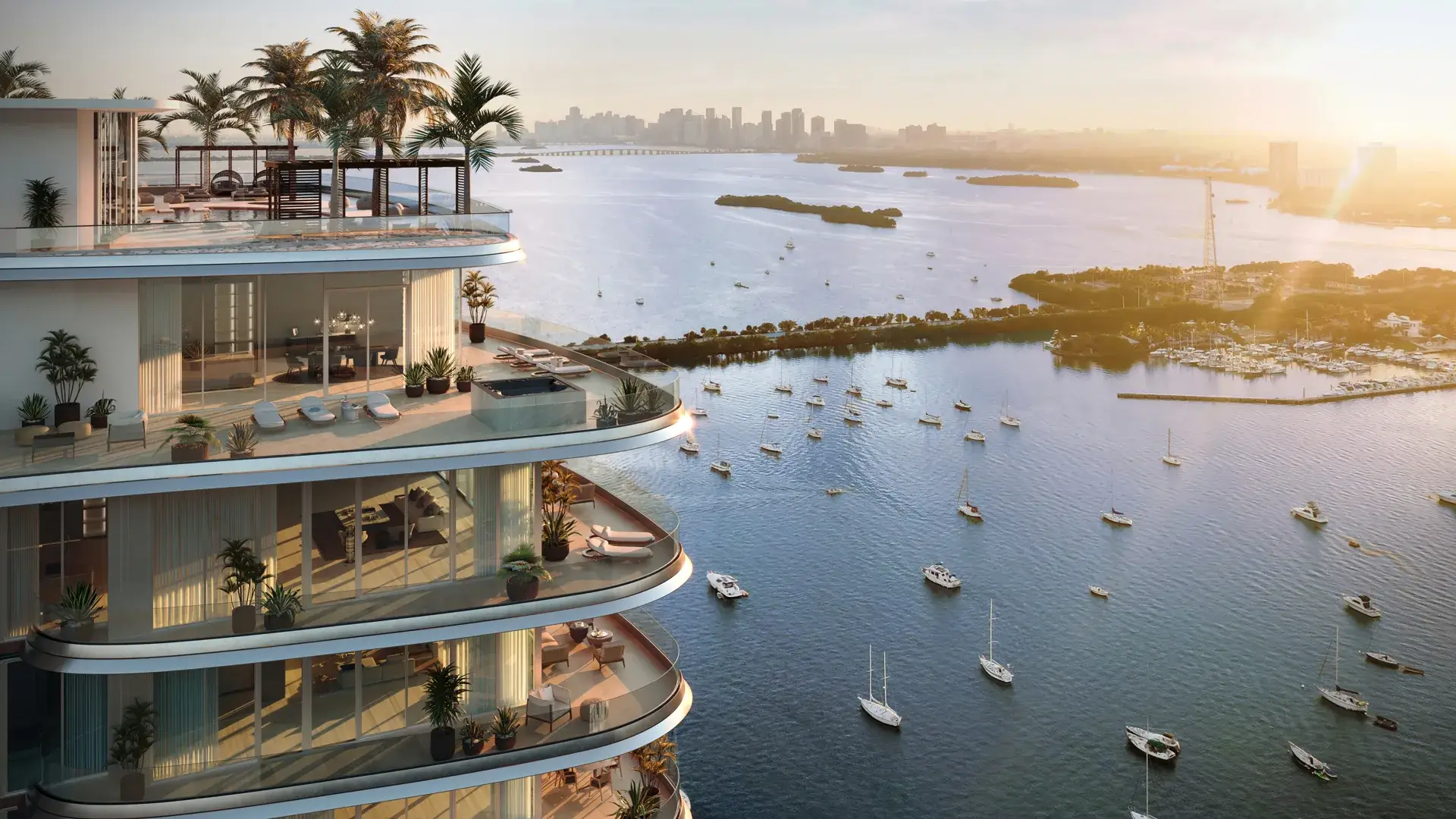
Buying one of the new Miami pre-construction condos is a great opportunity, but it raises practical questions. This guide answers the questions buyers ask most about Miami pre-construction condos and branded residences: deposits, completion dates, foreign buyers, short-term rentals and how to compare projects across Miami, Fort Lauderdale and the Palm Beaches.
Official resources: the Florida Division of Condominiums and the Miami-Dade Property Appraiser.
Why buyers choose Miami pre-construction condos
- Newest design and amenities: Miami pre-construction condos deliver the latest layouts, finishes, wellness and hospitality services.
- Staged deposits: Miami pre-construction condos usually require deposits over time instead of the full price up front.
- Early pricing and selection: early buyers of Miami pre-construction condos often get the widest choice of floors, lines and views.
- Fresh reserves: new Miami pre-construction condos start with fully funded reserves under Florida’s current condo laws.
Miami pre-construction condos: questions & answers
What are the best pre-construction condos in Miami for 2026–2027?
The right choice depends on location, budget, timing and how you plan to use the residence. Among the most requested projects today are The Residences at Mandarin Oriental, Miami on Brickell Key, Cipriani Residences Miami and Viceroy Brickell in Brickell, Faena Residences Miami on the Miami River, Four Seasons Private Residences Coconut Grove, Kempinski Residences Miami in the Design District and Ocean House Surfside on the oceanfront. Our team compares them side by side on pricing, deposits, delivery and resale potential.
What branded residences are being built in Miami?
South Florida has one of the largest branded-residence pipelines in the world. Current projects include Mandarin Oriental, Cipriani, Dolce&Gabbana, Faena, Four Seasons, Kempinski, Casa Tua (ORA by Casa Tua), Pagani, Viceroy, St. Regis, Ritz-Carlton and W. Browse the full project collection for every address.
How much deposit is required for Miami pre-construction condos?
Most projects use a staged deposit schedule. A common structure is 10% to 20% at each stage, often at reservation or contract, at groundbreaking and at top-off, for a total of roughly 30% to 50% before closing. The balance is paid at closing in cash or with a mortgage. Each developer sets its own schedule, and international buyers are sometimes asked for higher deposits, so always confirm the terms in the purchase contract.
Which new luxury condos in Miami will be completed in 2026 and 2027?
2026: Viceroy Brickell opened in June 2026. 2027: Ocean House Surfside (estimated mid 2027) and Cipriani Residences Miami (estimated August–September 2027). Buyers who want to close sooner should focus on these, or on resale units in recently completed buildings. Later deliveries: Four Seasons Coconut Grove and Pagani Residences (2028); Mandarin Oriental, Faena, Icon Beach, St. Regis Sunny Isles, W Pompano Beach, Viceroy Fort Lauderdale and Kempinski (2029); and ORA by Casa Tua (2030). Later deliveries usually offer longer deposit schedules and earlier-phase pricing. All dates are estimates and can change with permitting and construction.
Can foreign buyers purchase pre-construction condos in Miami?
Yes. There are no general restrictions on foreign nationals buying condominiums in Florida, and international buyers are a major part of the Miami market. Buyers typically need a valid passport, proof of funds and, if financing, a lender that works with foreign nationals. Tax planning matters: FIRPTA withholding applies when a foreign owner later sells, so speak with a cross-border tax advisor before buying. Our team works in English, Spanish, Portuguese, Romanian, Russian and Ukrainian.
Which Miami condos allow short-term rentals?
Most luxury condominiums restrict short-term rentals, often to minimum stays of 30 days or longer. A smaller group of buildings is designed for flexible rentals, including ORA by Casa Tua, 888 Brickell by Dolce&Gabbana, Viceroy Brickell and the condo-hotel units at W Pompano Beach. Rental rules are set in each building’s condominium documents and local regulations, so confirm them before you reserve.
What is the difference between branded residences and regular condos?
Branded residences are homes developed in partnership with a hotel, fashion or lifestyle brand that sets design standards and often operates services such as concierge, housekeeping, dining and spa access. Regular condos are managed by the association and a property manager without a brand operator. Branded residences usually carry a price premium and higher association or service fees, and buyers pay for the consistency, privacy and recognition that come with the brand.
Is it better to buy pre-construction or resale in Miami?
Pre-construction offers the newest design, staged payments and the chance to choose the best floor and view early, but you wait years for delivery. Resale offers immediate occupancy and a building you can inspect, often with more room to negotiate. Many buyers compare both before deciding.
Can I get a mortgage on a pre-construction condo, including as a foreign national?
Yes. Deposits during construction are usually paid in cash, and the balance can be financed with a mortgage at closing. Lenders review the finished building and your financial profile near completion, so get pre-qualified early and plan for changes in interest rates. Foreign nationals can also obtain mortgage loans (ipoteca / hipoteca) in the United States. This is a specialty product called a Foreign National Loan, offered by certain lenders that specialize in international buyers. These loans are generally made to a U.S. LLC that holds the property, and often do not require a U.S. credit history or Social Security number. Typical requirements include a larger down payment than a domestic loan (commonly 25% to 40%), a valid passport, proof of income and assets from your home country, and cash reserves; rates are usually higher than standard U.S. mortgages. Terms vary by lender and by building, since some lenders limit financing in condo-hotel or new-construction projects. Our team can introduce you to lenders experienced in foreign national financing and coordinate the LLC setup with your attorney and tax advisor.
What fees should I expect when buying a new condo in Miami, paying cash or with a mortgage?
In new construction, the developer’s contract usually passes several closing costs to the buyer that would normally be paid by the seller in a resale. As a general guide (percentages of the purchase price):
- Cash purchase: about 2% to 3% total, including: developer closing fee, commonly about 1.75% of the purchase price, which typically covers the Florida documentary stamp tax on the deed, the owner’s title insurance policy, the developer’s attorney and closing agent fees, and recording of the deed; working capital contribution to the association (usually 2 to 3 months of HOA fees, about 0.1% to 0.3%); plus your own attorney, any HOA application or estoppel fees, and prorated property taxes and HOA dues at closing. Some developers charge the items separately instead of a single fee, and the percentage varies by project, so check the purchase contract.
- With a mortgage: about 4% to 6% total, which adds: Florida documentary stamp tax on the note (0.35% of the loan amount) and intangible tax on the mortgage (0.20% of the loan amount); lender origination and points (commonly 0.5% to 2% of the loan); lender’s title policy, appraisal, credit and underwriting fees; and prepaid items such as initial escrow for property taxes and insurance. Foreign national loans are usually at the higher end of this range.
After closing, budget for monthly HOA fees (about $1.40 to $2.50 per sq ft), any brand service fees, annual property taxes (about 1.85% to 2.3%), and your own contents (HO-6) insurance. Florida buildings must also fund structural reserves, which is reflected in association budgets. Exact costs depend on the contract, so ask our team for a closing cost estimate for the specific residence.
What are the HOA fees in most Miami pre-construction condos, and what do they include?
Monthly association (HOA) fees in most luxury pre-construction condos range from about $1.40 to $2.50 per square foot of interior space, which is about $15 to $27 per square meter per month. For example, a 1,500 sq ft (139 m²) residence would pay roughly $2,100 to $3,750 per month. Branded residences with extensive hotel-style services can be higher, and fees are set in the developer’s estimated first-year budget, then adjusted by the association. Fees typically include: building insurance (wind, flood and liability), structural reserves required by Florida law, maintenance of common areas, pools, gym and spa, 24-hour security and front desk, concierge and valet staffing, landscaping, water, sewer and trash, elevator service, and often basic cable and internet. Brand services such as housekeeping, in-residence dining or private chef are usually billed separately.
What are property taxes on a new condo in Miami?
Property taxes in Miami-Dade and Broward typically run about 1.85% to 2.3% of the purchase price per year. In the first full year after closing, the property is reassessed at roughly its market value, so the purchase price is a good basis for budgeting. During construction you only pay taxes on the land share, which is usually minimal. The total rate is the sum of several taxing authorities (approximate shares of the purchase price):
- Public schools (school board): about 0.55% to 0.70%
- County government: about 0.45% to 0.60%
- City or municipality: about 0.50% to 0.75%, depending on the city (unincorporated areas pay a smaller unincorporated-area levy instead)
- Special districts and debt service: about 0.10% to 0.30%, including children’s services, water management, inland navigation, hospital districts and voter-approved bonds
- Non-ad valorem charges: fixed fees such as solid waste or special assessments, where applicable
Current law (2026): owners who make the condo their primary residence can apply for the Florida homestead exemption (about $51,411 off the assessed value in 2026) and the Save Our Homes cap, which limits annual assessment increases to 3%; non-homestead properties (second homes, rentals and investment units) have a 10% cap on non-school assessment increases. Amendment 3 (November 3, 2026 ballot): if approved by at least 60% of voters, starting January 1, 2027 the homestead exemption for non-school taxes would rise to up to $150,000 in 2027 and up to $250,000 in 2028, and the non-homestead cap would drop from 10% to 5% (non-school taxes only). New Florida residents from 2027 would start with a $50,000 non-school exemption and qualify for the larger amount in their fifth year. School taxes and tax rates are not capped. Exact rates are set every year by each taxing authority, so check the county property appraiser for the specific address.
How do special assessments and Florida milestone inspections affect selling a condo later?
Since the Surfside collapse, Florida law requires milestone inspections for condominium buildings of three or more habitable stories, generally when a building reaches 30 years of age (earlier if a local authority requires it) and every 10 years after that, plus a Structural Integrity Reserve Study (SIRS) at least every 10 years. Associations can no longer waive funding of reserves for structural items, and since the 2025 update (HB 913) associations may also fund required work with lines of credit or loans, but most repairs found in these reports are still paid through higher dues or special assessments. When you sell, this matters in three ways:
- Disclosure: resale buyers must receive the association’s milestone inspection summary and SIRS, and the estoppel certificate lists any approved or pending special assessments and their amounts.
- Special assessment clause: the sale contract decides who pays. Under the standard Florida (Florida Realtors/Bar) condo contracts, assessments levied before the effective date are usually paid by the seller, and those levied afterward by the buyer; installments can be split or credited at closing. Negotiate this clause carefully, because a large assessment can shift tens of thousands of dollars between buyer and seller.
- Price and financing: buildings with unfunded repairs or pending assessments can be harder to finance and may sell at a discount, while buildings with healthy reserves and clean reports are easier to sell.
This is a key advantage of new construction: a newly completed building is decades away from its first milestone inspection and starts with reserves funded from day one, which supports resale value. When you eventually sell, request the latest milestone report, SIRS and estoppel early, and review the special assessment clause with your agent and a Florida real estate attorney.
What happens if a pre-construction project is delayed?
Florida purchase contracts include a completion deadline and describe your rights if it is missed. Deposits are generally held in escrow, and funds above a set amount may be used for construction only under specific legal conditions. Review these terms carefully with an attorney before signing.
How are deposits held, and how are buyers protected if the developer becomes insolvent?
Florida condominium law (Chapter 718, Florida Statutes) requires pre-construction deposits to be held by an independent escrow agent, typically a Florida attorney, title company or bank, under a written escrow agreement disclosed in the offering documents. Key protections:
- Deposits up to 10% of the purchase price must stay in escrow until closing and cannot be used by the developer. If the developer defaults or cannot complete the project, these funds are returned to the buyer.
- Deposits above 10% may be released for actual construction and development costs (never for marketing, salaries or general overhead), but only if the purchase contract clearly allows it. These amounts are at greater risk if the developer fails.
- 15-day right to cancel: buyers may cancel within 15 days of signing the contract or receiving the required condominium documents and receive a full refund.
- Completion deadline: contracts must set a completion date, and buyers generally have remedies, including a refund of escrowed deposits, if the developer fails to deliver.
- Extra security: some developers keep all deposits in escrow, or replace released funds with a surety bond or letter of credit, and most major projects close construction financing before building, which reduces completion risk.
In an insolvency, money still held in escrow belongs to the buyer under the escrow agreement and is generally kept separate from the developer’s assets, while deposits already released for construction may become a claim against the developer or the project. Before signing, confirm the escrow agent, whether deposits above 10% can be used, the developer’s track record and whether construction financing is in place, and review the contract with a Florida real estate attorney.
Which Miami neighborhoods are best for luxury condos?
Brickell and Brickell Key for urban living, Coconut Grove and Key Biscayne for a greener setting, Edgewater and the Design District for culture and bay views, Surfside and Sunny Isles Beach for the oceanfront, and Fort Lauderdale, Hollywood, Pompano Beach and West Palm Beach for marinas and coastal lifestyle. See the full project collection by area.
How do I start the buying process?
Tell our team your budget, timing and preferred areas. We send floor plans, current pricing and availability, arrange virtual or private tours, and guide you through reservation, contract review, deposits and closing. Call 305 571-6319 or message us through the WhatsApp bubble.
General information only, not legal, tax or financial advice. Prices, deposits, dates and rental rules are set by each developer and can change; review the current offering documents.
Questions not answered here? Call our team at 305 571-6319 or message us through the WhatsApp bubble.